

I’ve reviewed keyword strategies for hundreds of websites, and the same mistake keeps showing up: people chase the biggest numbers they can find without understanding what those numbers actually mean. A client once came to me thrilled that they’d targeted a keyword with 90,000 monthly searches — only to wonder, six months later, why not a single visitor had come from it. The answer was buried in the data: search volume alone had told them nothing useful. Understanding what search volume is in SEO — and more importantly, how to use it — is the difference between a keyword strategy that works and one that wastes months of your effort.
What is Search Volume in SEO?
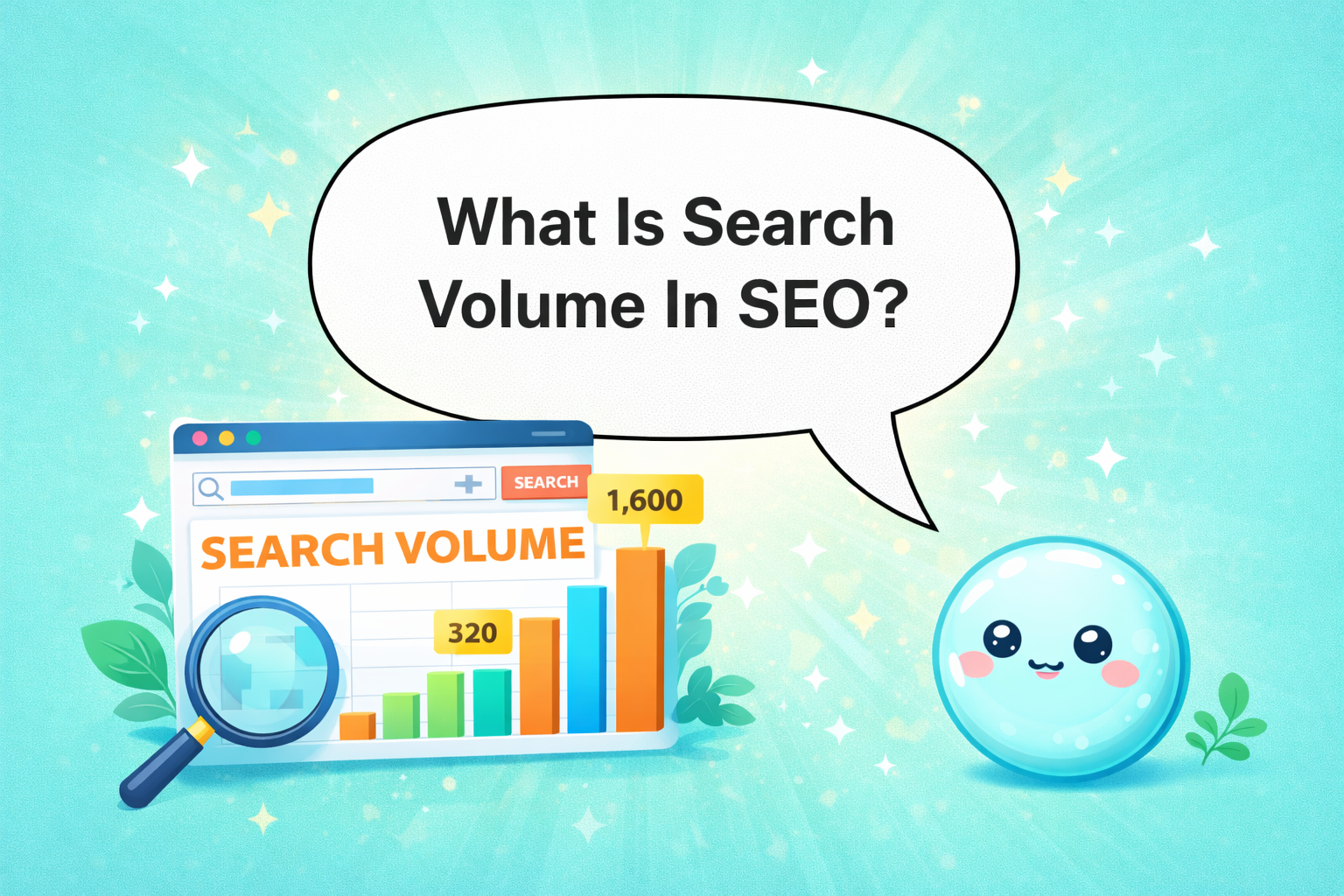
Search volume in SEO refers to the average number of times a specific keyword is searched on a search engine — typically Google — per month. It helps you gauge demand for a topic and prioritize which keywords are worth targeting in your content strategy.
Why Search Volume Is the Starting Point of Every SEO Decision
Before I talk about what makes a “good” search volume number, let me explain why this metric exists in the first place — and why it matters so much.
Google processes approximately 13.7 billion searches every day, which translates to over 5 trillion searches a year. That’s an almost incomprehensible amount of human curiosity, intent, and purchasing behavior being expressed through a search bar. Every one of those searches represents a person looking for something — information, a product, a solution, a service.

Search volume is how we measure how often any specific phrase shows up in that massive stream of queries. When I look at keyword data for a client, I’m essentially asking: “How many people are expressing this specific need every month?” That number shapes everything — the content I recommend, the pages we prioritize, and the realistic traffic goals we set.
A full 68% of all online experiences begin with a search engine. That means most of your potential customers start their journey by typing something into Google. Understanding search volume tells you whether enough of them are typing the phrase you care about.
Without search volume data, you’re essentially writing content in the dark and hoping someone finds it. With it, you can make deliberate decisions about where to put your energy.
What “Average Monthly Searches” Actually Means
When most tools report what is search volume in SEO, they show you an “average monthly search volume” — typically calculated over the trailing 12 months. This is important to understand, because it’s an average, not a guarantee.
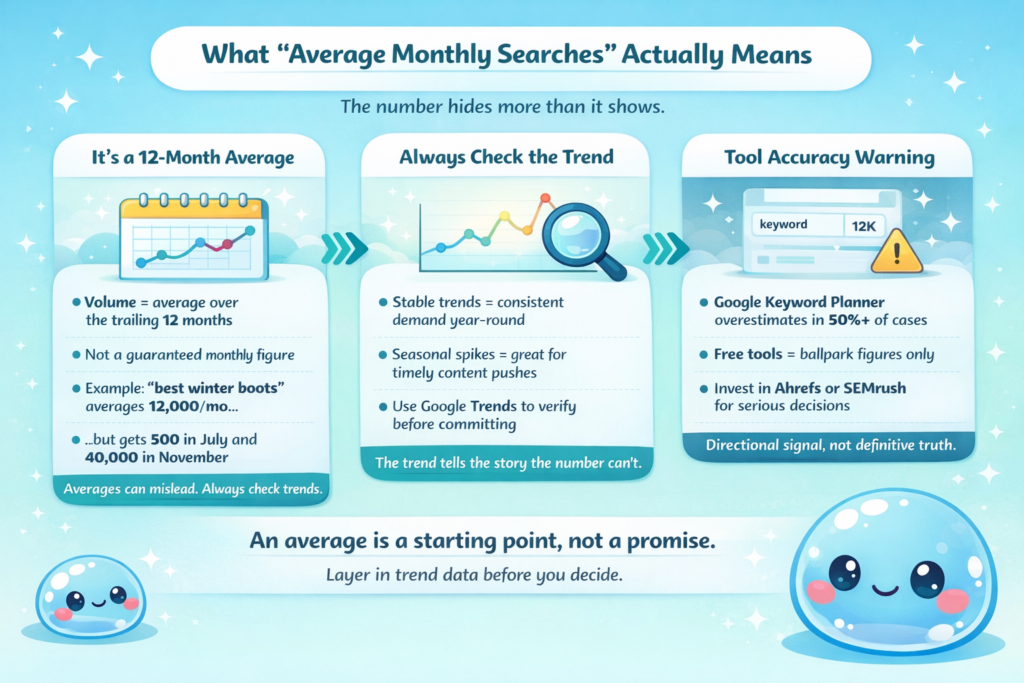
Here’s what I mean: If a keyword like “best winter boots” has a search volume of 12,000, that doesn’t mean exactly 12,000 people search for it every month. In reality, that term might get 500 searches in July and 40,000 searches in November. The 12,000 figure is the average across the year.
This is why I always look at search volume trends, not just the snapshot number. A keyword with stable volume year-round signals consistent demand. A keyword with volatile, seasonal spikes might be perfect for a timely content push — or misleading if you interpret it as a steady opportunity.
Tools like Google Trends, Ahrefs, and SEMrush all give you historical trend data alongside raw volume figures. I always check the trend graph before recommending a keyword to a client. It tells a story the average number simply can’t.
One more thing worth knowing: Google Keyword Planner has been shown to drastically overestimate search volumes in over 50% of cases. This is something I warn every client about. Free tools can give you ballpark figures, but if you’re making serious SEO decisions, investing in a dedicated keyword research tool is worth every penny.
High Volume vs. Low Volume Keywords: What’s Really the Right Choice?
This is the question I get asked most often: “Should I go after high-volume keywords or low-volume ones?” My honest answer is — it depends on your site, your goals, and your realistic ability to rank.
Let me break down both ends of the spectrum.
High-Volume Keywords
These are the big, broad terms — think “running shoes,” “email marketing,” or “best CRM software.” They can drive enormous amounts of traffic if you rank for them, but the keyword difficulty is almost always extremely high.
Only 0.0008% of keywords have over 100,000 monthly searches. These are rare, fiercely competitive terms dominated by established brands with years of authority and thousands of backlinks. If your site is relatively new, chasing these is like a local bakery trying to outrank Amazon for “buy cake online.” It’s theoretically possible, but practically not the best use of your time.
Low-Volume Keywords (Long-Tail)
This is where I spend most of my time when building SEO strategies for growing websites. Long-tail keywords — those specific, multi-word phrases like “best running shoes for flat feet women” — have lower individual search volumes, but they come with three massive advantages.
First, long-tail keywords account for 70% of all search traffic. The collective demand is enormous, even if any single phrase has modest volume.
Second, long-tail keywords average a conversion rate of around 36% — compared to the highest-performing landing pages, which typically see around 11%. People searching with specific phrases know what they want. They’re closer to a decision.
Third, 94.74% of all keywords have 10 or fewer monthly searches. This isn’t a reason to avoid low-volume terms — it’s a reminder that the keyword universe is vast, and ranking for dozens of niche, specific queries can add up to substantial organic traffic over time.
I always tell clients: if you’re a newer site or a small business, your fastest path to real organic traffic is through specific, lower-competition keywords. Win the long tail first. Authority builds from there.
High Volume vs Low Volume Keywords: Comparison
| Aspect | High-Volume Keywords | Low-Volume Keywords (Long-Tail) |
| Basic meaning | Broad search phrases used by a huge number of people. Usually one to three words. | Longer, more specific search phrases. Often four or more words and very intent-driven. |
| Example keywords | “running shoes”, “email marketing”, “CRM software”, “protein powder” | “best running shoes for flat feet women”, “email marketing tools for small businesses”, “CRM for real estate agents”, “vegan protein powder without soy” |
| Average search volume | Often 10,000 – 100,000+ monthly searches. The very biggest exceed 100,000. | Usually 10 – 1,000 monthly searches, sometimes even fewer. |
| Frequency in the keyword universe | Extremely rare. Only about 0.0008% of all keywords exceed 100,000 searches per month. | Extremely common. 94.74% of keywords receive 10 searches or fewer per month. |
| Competition level | Very high. Major brands dominate these results with large backlink profiles and long-standing authority. | Much lower competition. Smaller sites can compete and rank with good content and focused optimization. |
| Difficulty to rank | Hardest category in search. Ranking usually requires years of domain trust, strong link signals, and strong site authority. | Much easier. Newer websites can reach page one with well-targeted content and good on-page optimization. |
| Search intent clarity | Often vague. A broad term like “running shoes” could mean research, comparisons, or buying. | Very clear intent. A search such as “best running shoes for flat feet women” signals a specific need. |
| Conversion potential | Lower conversion rates. Many users are still researching or browsing. | Much higher conversion rates. Studies often show around 36% conversion potential, far higher than standard landing pages. |
| Traffic potential from one keyword | Massive traffic if ranked in the top positions. One keyword can drive thousands of visits monthly. | Individual keywords bring small traffic numbers, but hundreds of long-tail phrases together can create strong traffic growth. |
| Search traffic share | A small slice of total search queries. | Long-tail searches represent around 70% of all search traffic across the web. |
| Content strategy required | Requires highly authoritative pages such as category pages, large guides, or major product hubs. | Works well with niche articles, comparison posts, tutorials, and specific product pages. |
| Typical SERP competitors | Amazon, Wikipedia, Forbes, large SaaS companies, global brands, high-authority media sites. | Smaller blogs, niche sites, specialized businesses, and targeted informational content. |
| Time required to rank | Often years unless the site already has strong authority. | Rankings can appear much faster, sometimes within weeks or months depending on competition. |
| Link building requirement | A large backlink profile is often needed to compete. | Fewer links required, strong relevance and content depth can be enough. |
| Content specificity | Broad topic coverage. Often general information or high-level pages. | Highly focused topics that address a precise question or need. |
| Role in SEO strategy | Long-term authority targets once the site gains strength. | Best starting point for growing sites and niche businesses. |
| Scalability | Hard to scale because each keyword requires heavy effort. | Very scalable. Hundreds of long-tail topics can be targeted through multiple pages. |
| Risk vs reward | High risk but massive reward if achieved. | Lower risk with steady traffic gains. |
| Best suited for | Established brands, large content sites, and businesses with strong link authority. | New websites, niche blogs, startups, and small businesses building organic visibility. |
| Strategic takeaway | Valuable but extremely difficult targets that should come later in site growth. | The fastest path to steady organic traffic and meaningful conversions. |
How to Find and Evaluate Search Volume Data
Understanding what search volume is in SEO is step one. Actually using that data to make decisions is where most people get stuck. Here’s how I approach it — and how you can too.
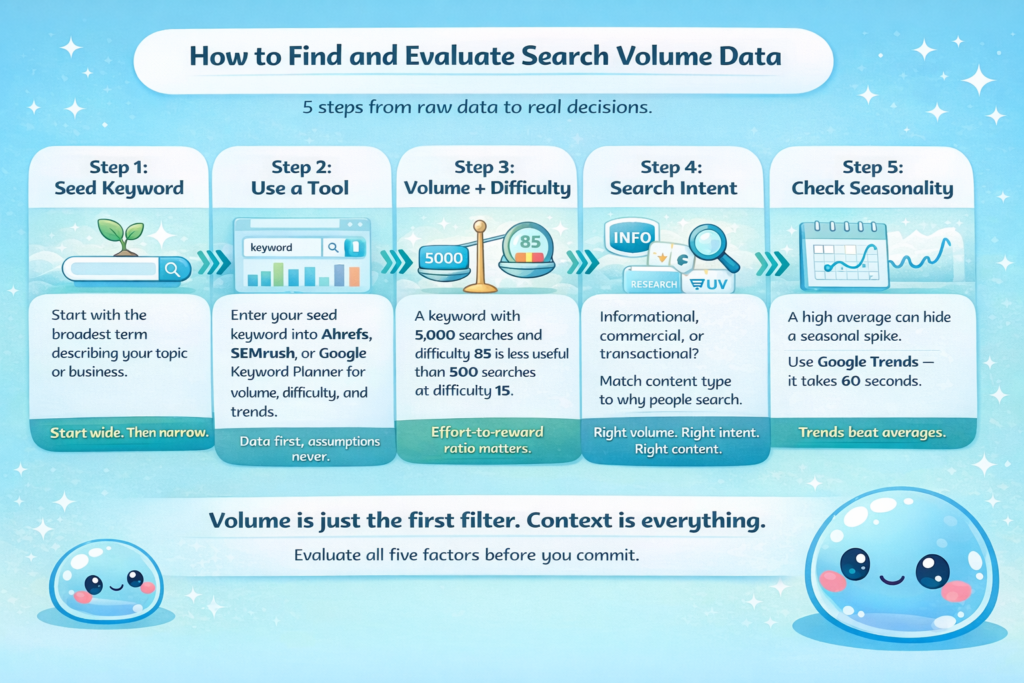
Step 1: Start With a Seed Keyword
Pick the broadest term that describes your topic or business. If you run a yoga studio in Austin, your seed keyword might be “yoga classes Austin.” This becomes your research starting point.
Step 2: Use a Keyword Research Tool
Enter your seed keyword into a tool like Ahrefs’ Keywords Explorer, SEMrush’s Keyword Magic Tool, or Google Keyword Planner for free estimates. Each tool will return a list of related keywords with their search volumes, keyword difficulty scores, and trend data.
Step 3: Look Beyond Volume — Consider Difficulty
Search volume means nothing without context. A keyword with 5,000 monthly searches and a keyword difficulty score of 85 (out of 100) is essentially inaccessible to a new site. A keyword with 500 monthly searches and a difficulty of 15 is a genuine opportunity. I always evaluate the ratio of volume to difficulty — I call it the “effort-to-reward equation.”
Step 4: Assess Search Intent
This is the most overlooked element of keyword research. Search volume tells you how many people search — search intent tells you why they search. A keyword like “what is email marketing” signals informational intent (someone learning). “Email marketing software for small business” signals commercial intent (someone evaluating options). “Buy email marketing plan” signals transactional intent (someone ready to pay).
Matching your content to the right intent is just as important as targeting the right volume. I’ve seen pages ranking for high-volume terms but converting almost no one — purely because the content type mismatched the intent behind the search.
Step 5: Check for Seasonality
Before finalizing any keyword, I check its trend line. A keyword with an attractive average monthly volume might actually be a seasonal spike. Google Trends is free and excellent for this. It takes 60 seconds to check and can save you from investing in content that only performs 2 months a year.
The One Statistic That Changes How You Think About Search Volume
Here’s something I share with every client that tends to stop them in their tracks: 15% of all Google searches on any given day have never been searched before — ever.
Think about what that means. Every single day, hundreds of millions of entirely new search queries are entered into Google for the first time. These are phrases that no keyword tool can show you, because they’ve never existed in historical data.
This is why I don’t let search volume be the only filter. Some of the best content opportunities I’ve ever identified came from understanding emerging topics — not just topics with established search volume. Early movers on a new query often capture massive traffic as that query grows in popularity.
This is also why connecting your Google Search Console data is so valuable. Google Search Console shows you the actual queries your site is already appearing for in search results — including ones that might have low or unmeasured volume but are clearly relevant to real users visiting your pages. At sneo.ai, we connect directly to your Google Search Console data so I can surface these hidden opportunities for you in plain English — no digging through spreadsheets required.

Common Search Volume Mistakes I See All the Time
After years of analyzing sites and keyword strategies, I’ve watched the same errors repeat themselves. Here are the ones that cost website owners the most traffic — and how to avoid them.
Mistake 1: Targeting high-volume keywords without considering domain authority. I’ve seen brand-new websites target terms with 50,000+ monthly searches and wonder why they never rank. Your domain authority matters enormously. Stick to volume-difficulty combinations that your current site can realistically win.
Mistake 2: Ignoring search volume entirely in favor of “just writing good content.” Good content is necessary but not sufficient. Even great content on a topic nobody searches for will get almost no organic traffic. Volume tells you whether the demand exists.
Mistake 3: Only looking at one keyword per page. Every page on your site ranks for hundreds or thousands of related terms — not just the one you target. Top-ranking pages typically rank for dozens of keyword variations beyond their primary target. This is why writing comprehensively around a topic, using related terms naturally, captures far more traffic than obsessing over a single exact-match phrase.
Mistake 4: Treating search volume as a fixed number. Search behavior shifts constantly. Google searches per user in the US declined nearly 20% year-over-year between 2024 and 2025, largely driven by AI-powered answers reducing the need for follow-up searches. This doesn’t mean SEO is dying — it means keyword data needs to be re-evaluated regularly. What was a 10,000/month keyword two years ago may now look very different.
Mistake 5: Relying solely on Google Keyword Planner. As I mentioned earlier, Keyword Planner overestimates in a majority of cases. Use it as a directional signal, not a definitive source.
How Search Volume Fits Into Your Bigger SEO Picture
Search volume is one piece of a larger puzzle. Here’s how it connects to the broader metrics that determine your SEO success.
- Volume + Click-Through Rate (CTR): High volume is only valuable if you can actually earn clicks. The top organic result on Google captures around 27.6% of all clicks. If you rank fifth or lower, your effective traffic from even a high-volume term drops dramatically. When I calculate traffic potential for a keyword, I always model realistic rank positions — not just volume.
- Volume + Keyword Difficulty: As discussed, volume without difficulty context is meaningless. I look for sweet spots: keywords with meaningful volume and achievable difficulty for my client’s current domain strength.
- Volume + Conversion Potential: Traffic is a vanity metric if it doesn’t convert. I’ve worked with sites getting 50,000 monthly visitors from informational keywords but struggling to generate leads. Layering search intent over volume data helps me steer clients toward keywords that attract the right traffic — people likely to take action.
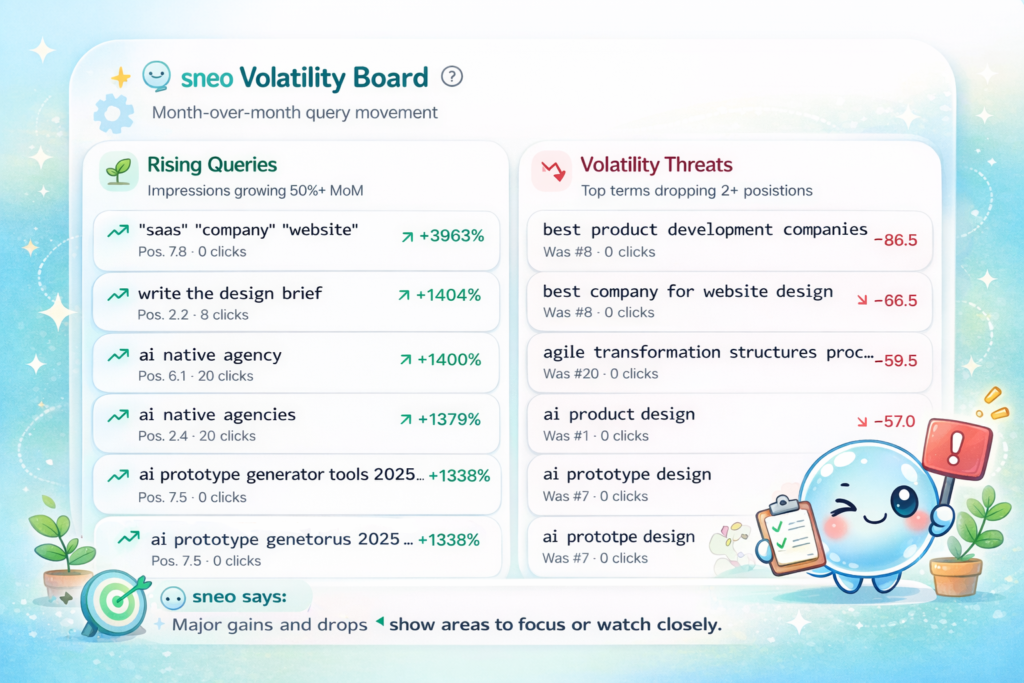
- Volume + Google Search Console Data: This is where it all comes together for me. Your Google Search Console shows real impressions, real clicks, and real average positions for every query your site appears for. Combining that with volume estimates from tools like Ahrefs or SEMrush gives you a complete picture. That’s exactly why sneo.ai integrates directly with your Search Console — so I can take your live site data and immediately identify where you have ranking momentum, what queries are generating impressions but no clicks, and which volume opportunities are sitting untapped right on your own site.
Advanced Tips: Using Search Volume Like a Pro
Once you have the fundamentals down, here’s how I squeeze more value from search volume data.
1) Build keyword clusters, not just individual targets. Instead of targeting one keyword per page, I group related keywords with overlapping intent into clusters and build content that addresses the entire cluster. This way, one page can rank for multiple related terms simultaneously — multiplying the total traffic potential.
2) Use volume to inform content calendar priorities. When planning a content calendar for clients, I use search volume data to sequence topics. High-opportunity, lower-competition keywords get prioritized early to build site authority. This creates momentum that makes future, harder keywords more attainable.
3) Watch for “People Also Ask” and “Related Searches” patterns. These Google SERP features are gold mines for discovering related search terms — many of which have search volume that tools haven’t fully captured yet. I use them constantly to identify subtopics and supporting content ideas.
4) Revisit your keyword data quarterly. SEO decisions should be based on evidence, not assumptions — and the evidence changes. Search trends shift with seasons, news cycles, and evolving user behavior. I set a quarterly reminder to review the search volume of my top target keywords and adjust strategies accordingly.
Making Search Volume Work Sustainably
The websites I’ve seen succeed long-term at SEO aren’t the ones who found the one high-volume keyword and rode it. They’re the ones who built a systematic approach — consistently researching, targeting, creating, and measuring.
Here’s the habit I recommend for anyone managing their own SEO:
Once a month, spend 30 minutes doing a keyword health check. Look at your Google Search Console performance data. Identify the top 10 queries driving impressions. Check their click-through rates. Then open your keyword tool and see whether there are related terms with strong volume and lower difficulty that you’re not yet targeting. Over time, this compounds. Small, consistent gains accumulate into significant organic growth.
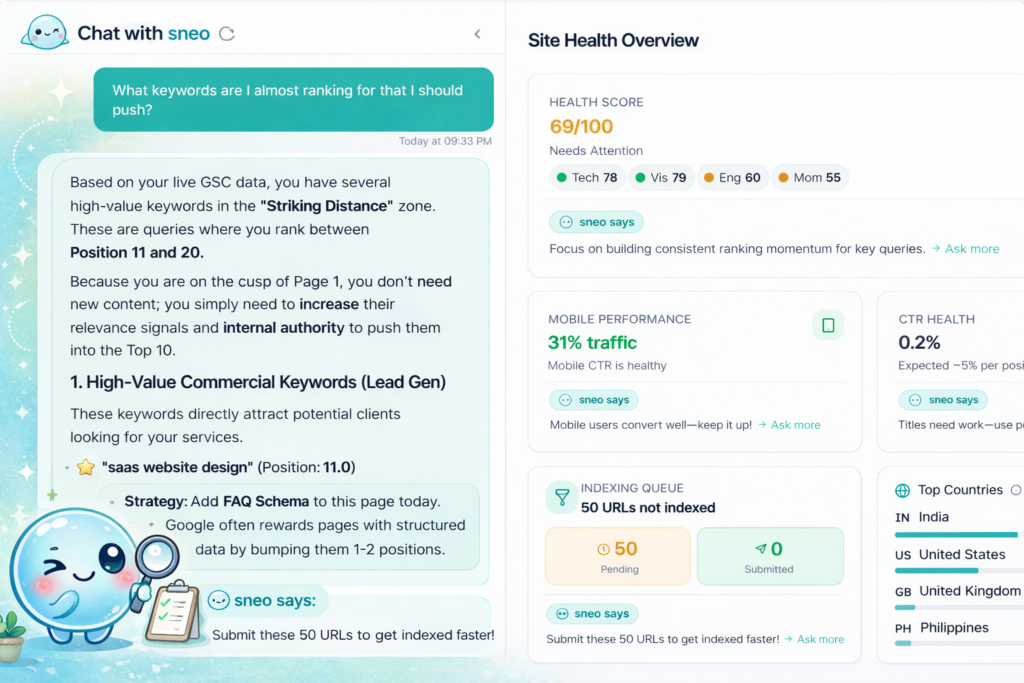
This is the workflow I’ve built sneo.ai around. Instead of manually cross-referencing spreadsheets and dashboards, you can simply ask — “What keywords are I almost ranking for that I should push?” or “Which of my pages have the highest impression volume but low CTR?” and get a clear, specific answer rooted in your actual data.
Conclusion
I’ve spent years helping website owners make sense of their SEO data, and I can tell you this: search volume is one of the most powerful — and most misunderstood — metrics in the game. It’s not about chasing the biggest numbers. It’s about finding the right numbers for your site, your audience, and your goals right now.
Start with understanding what search volume in SEO is at its core — the average number of monthly searches for a term. Layer in keyword difficulty, search intent, and trend data. Build a strategy around keyword clusters, not isolated terms. And revisit your data regularly, because search behavior never stays still.
Your Google Search Console is already sitting there, full of insights about what’s working and what’s possible. The questions you ask of that data will determine how fast you grow. That’s exactly what I built sneo.ai to help with — to be the SEO analyst in your corner, translating your data into decisions you can actually act on. Connect your Search Console and ask me anything. Let me show you what your data is trying to tell you.
Frequently Asked Questions (FAQ)
Q1: What is search volume in SEO, in simple terms?
Search volume in SEO is the average number of times a specific keyword or phrase is searched on a search engine — usually Google — per month. It tells you how much demand exists for a given topic and helps you decide whether it’s worth creating content around that keyword.
Q2: What is considered a “good” search volume for SEO?
There’s no single right answer — it depends on your site’s authority, your niche, and your goals. For newer sites, a monthly search volume of 100–1,000 with low keyword difficulty is often a better target than chasing high-volume, high-competition terms. Established sites with strong domain authority can viably target keywords in the tens of thousands.
Q3: Which tools can I use to check search volume?
The most widely used tools include Google Keyword Planner (free), Ahrefs, SEMrush, Moz Keyword Explorer, and Ubersuggest. Each calculates volume slightly differently, so I recommend cross-referencing at least two sources for important keyword decisions.
Q4: Is high search volume always better?
No — and this is one of the most common SEO misconceptions. High-volume keywords are usually highly competitive. A keyword with 200 monthly searches and a keyword difficulty of 10 will often drive more real traffic to your site than a 50,000-volume keyword where you have no realistic chance of ranking on page one.
Q5: How does search volume relate to keyword difficulty?
They’re closely linked but separate metrics. Search volume tells you how often a keyword is searched. Keyword difficulty tells you how hard it is to rank for it. The best keywords balance sufficient search volume with a difficulty level your site can realistically compete for. Always evaluate them together, never in isolation.
Q6: Can I rank for keywords with zero reported search volume?
Yes — and sometimes those are worth targeting. A keyword showing zero volume in a tool may still receive searches, especially if it’s a new or emerging term. Also, ranking for zero-volume terms can still drive traffic if your page appears for related, broader queries. That said, I’d recommend balancing these with keywords where demand is confirmed.
Q7: Does search volume change over time?
Absolutely. Search behavior evolves with trends, seasons, news events, and shifts in technology. A keyword’s volume today could be very different from what it was two years ago. I recommend reviewing your target keywords quarterly and using Google Trends to spot momentum shifts before they affect your traffic.
Q8: How does sneo.ai help with search volume analysis?
sneo.ai connects directly to your Google Search Console and lets you ask plain-English questions about your SEO performance. Instead of manually cross-referencing keyword data across multiple platforms, you can ask things like “Which of my pages have high impressions but low clicks?” or “What keywords am I close to ranking for?” and get instant, actionable answers tailored to your specific site — not generic advice.