

I talk to agency owners and consultants every single day. The story is almost always the same. You start your business because you are good at something—maybe it’s web design, maybe it’s Google Ads, or maybe it’s general marketing strategy. Then, a client asks, “Do you do SEO?”
You say yes. You don’t want to lose the business. But suddenly, you are stuck trying to manage keyword research, technical audits, and link building at 2 AM, all while trying to run your actual business.
I’ve been there. I know that panic of over-promising and wondering how you will deliver.
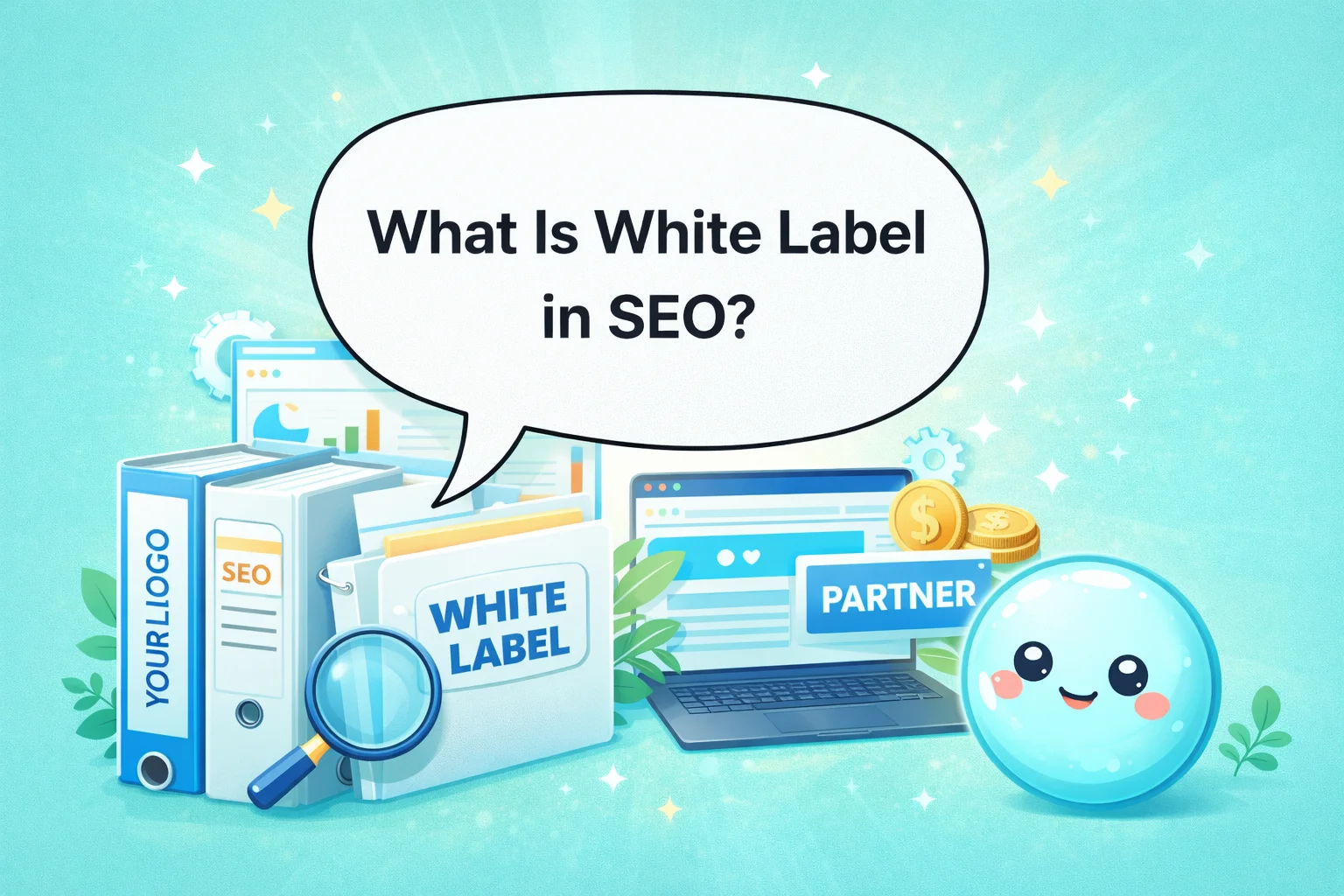
In 2026, smart agencies aren’t trying to do everything themselves. They are building systems that allow them to scale. This is where white label SEO changes the game. It allows you to sell expert-level search engine optimization services under your own brand while a partner team handles the execution.
In this guide, I will walk you through exactly how this model works, how to choose a provider that won’t embarrass you, and how I use tools like sneo.ai to make the reporting process look incredible.
What is White Label SEO?
White label SEO is a partnership where Provider A does the work, and Agency B (that’s you) sells it to the client under Agency B’s brand name.
Think of it like a grocery store selling their “own brand” of cereal. The grocery store didn’t bake the flakes or package the box in the back room. A massive cereal manufacturer did it, slapped the store’s label on it, and shipped it. The customer gets a quality product, the store gets the credit, and the manufacturer gets the volume.
In our world, it works like this:
- You sell an SEO package to your client.
- You collect the payment.
- The Provider performs the audit, fixes the site, and builds the links.
- The Provider sends you an unbranded report.
- You put your logo on it and present it to the client.
As far as your client knows, you have a brilliant in-house team working specifically on their project.
How It Works in Practice: The Behind-the-Scenes Flow
I have seen many people get confused about the logistics. Does the provider talk to the client? Do they have access to your email?
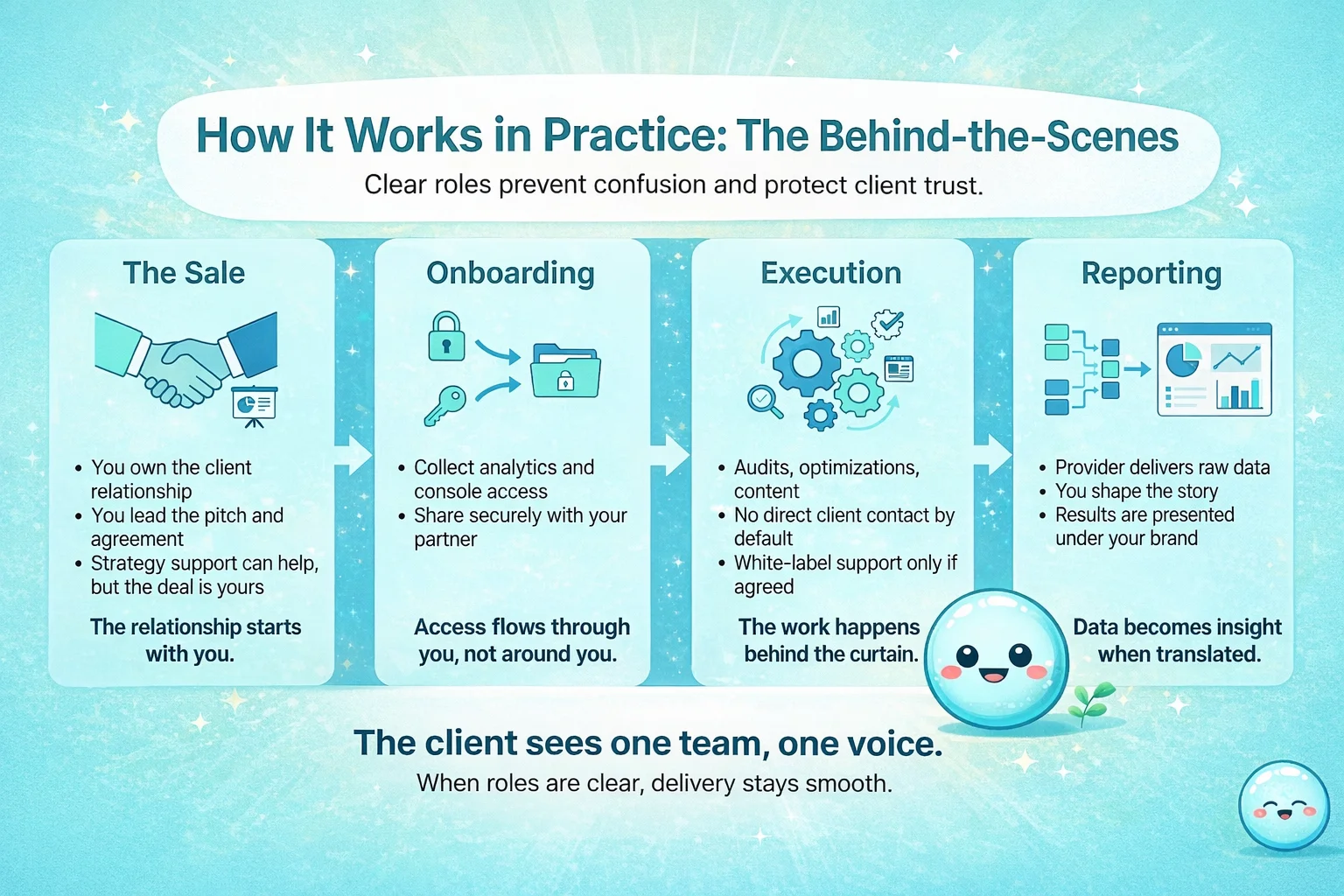
Here is the typical flow I see working best in 2026:
1. The Sale
You handle the connection. You pitch the client. If you need help with the pitch deck or the strategy, many providers (and tools like sneo.ai) can help you generate a plan to show the client, but the handshake happens between you and them.
2. Onboarding
You collect the client’s access details—Google Analytics, Search Console, website login. You pass these securely to your white label partner.
3. Execution
The partner gets to work. They run the audits, optimize the meta tags, and write the content. A good partner works in the background. They never contact the client directly unless you have a specific “white label support” agreement where they act as a member of your team using an email address on your domain (e.g., seo-team@youragency.com).
4. Reporting
At the end of the month, the provider gives you the data. This is often where things get messy, and it is a big reason I built sneo.ai. Raw data from a provider can look dry. You need to translate that work into a story your client understands, branded with your colors and logo.
White Label SEO vs. Private Label SEO vs. SEO Reselling
You will hear these terms thrown around in meetings. While people use them interchangeably, there are slight differences in how the industry views them.
| Term | Definition | Primary Focus |
| White Label SEO | You sell a pre-packaged or custom service created by someone else under your brand. | Branding & Scalability |
| Private Label SEO | Similar to white label, but often implies a product made exclusively for your brand with specific modifications. | Exclusivity & Custom Specs |
| SEO Reselling | The act of selling these services. You are the “reseller.” | Sales & Markup |
“Reselling” is the action; “White Label” is the mechanism.
Private label online marketing often fits in here too. It usually refers to a broader suite—PPC, social media, and SEO—packaged together.
White Label SEO vs. Traditional SEO Outsourcing
“Rahul,” you might ask, “isn’t this just outsourcing?”
Yes and no.

Outsourcing usually implies grabbing a freelancer from a marketplace to fix a specific problem. “I need someone to fix these 404 errors.” It is transactional and often messy. You have to manage the freelancer closely.
White label SEO is a productized service. You are hiring a team that has a set process. They are not just fixing a bug; they are running a campaign.
Major Differences:
- Ownership: In white label, the provider often brings their own tools and strategy. In outsourcing, you usually have to provide the strategy.
- Consistency: White label providers usually have SOPs (Standard Operating Procedures). Freelancers might do things differently every time.
- Scale: A white label agency can handle 50 of your clients. A freelancer cannot. This scalability is why 73% of agencies now use white label services to expand their capabilities without adding headcount.
Who Should Use White Label SEO?
I believe this model isn’t for everyone, but it is perfect for specific groups. Recent data shows that the global SEO services market is expected to reach $108 billion by 2026, driven largely by agencies needing to offer more without building everything in-house.
1. Web Design & Development Agencies
You build beautiful sites. Then clients complain six months later that nobody is visiting them. Offering SEO retains that client.
2. Marketing Consultants
You handle strategy and branding. You don’t have time to build backlinks or write meta descriptions.
3. PPC Agencies
You are already running their Google Ads. SEO is the natural cross-sell to lower their blended acquisition costs.
4. Solo SEOs Scaling Up
This is a common one. You are great at SEO, but you are capped at 5 clients because there are only so many hours in the day. Using a white label partner for the heavy lifting allows you to focus on strategy and account management.
Common Use Cases
- Launching a New Service: You want to test if your clients will buy SEO without hiring a full-time employee (which costs salaries, benefits, and training).
- Scaling Volume: You landed a massive franchise client with 50 locations. You can’t hire 10 people overnight. A white label partner can absorb that volume immediately.
- Handling Technical Tasks: Maybe you are great at content, but technical SEO scares you. You can white label just the technical fixes.
What Services Are Usually Included?
When you sign up for a white label SEO package, you should expect a complete ecosystem.
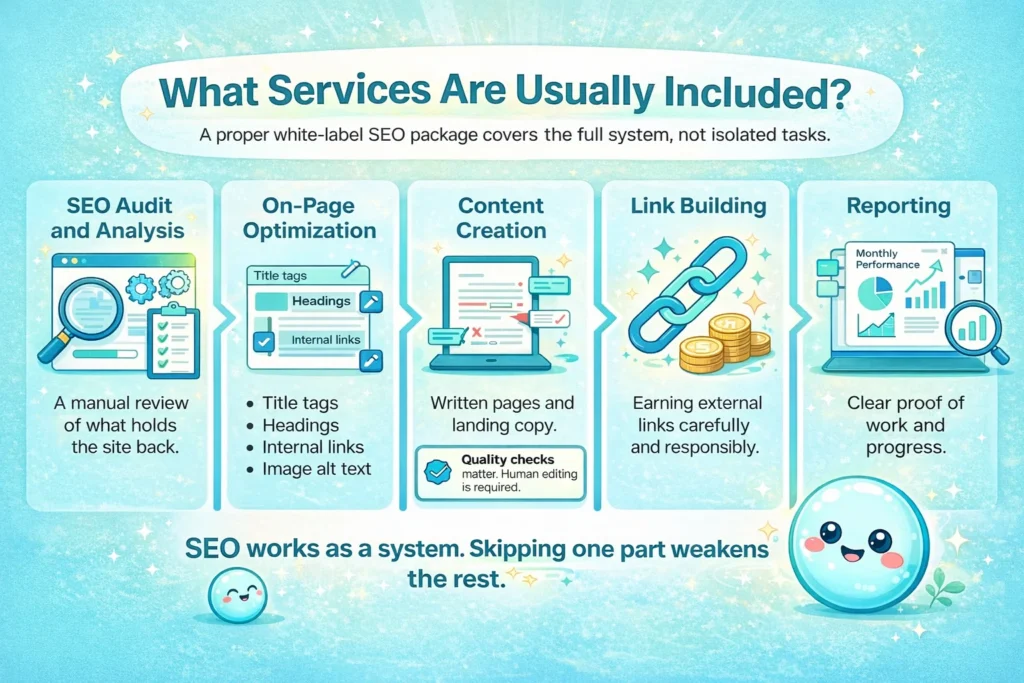
1) SEO Audit & Analysis
A deep dive into the site’s current health. This isn’t just an automated score; it should be a manual review of what is holding the site back.
2) On-Page Optimization
Fixing title tags, headings, internal linking, and image alt text.
3) Content Creation
Writing blog posts and landing page copy. Warning: Always check the quality here. In 2026, many providers will use generic AI text without human editing. Ensure your partner has editorial standards.
4) Link Building
Getting other sites to link to your client. This is the hardest part to fake and the most risky if done wrong.
5) Reporting
The monthly deliverable that proves your value.
The Reality of SEO Agency Partnerships
I view an SEO agency partnership as a marriage, not a tinder date.
If you treat a provider as a vendor you can beat up on price, the work will suffer. If you treat them as a partner, they will save your hide when a client demands a rush job.
Short-term subcontracting fixes a leak. Long-term partnerships build a new revenue stream.
In a real partnership, you discuss strategy. You ask, “My client wants to rank for ‘best vegan shoes,’ is that realistic?” A good partner will tell you the truth, not just take the money.

How Branded Solutions Work for Clients
Your client trusts you. They don’t know “SEO Whiz Kids LLC” in a different time zone. They know you.
When you deliver branded SEO solutions, the branding acts as a wrapper of trust.
- The Emails: Come from you.
- The Dashboard: Has your logo.
- The Strategy: Is presented in your voice.
This is where I see agencies fail most often. They get a generic PDF report from their provider and forward it to the client without reading it. The client opens it, sees technical jargon they don’t understand, and cancels.
My Advice: Take the raw data, put it into a tool that allows you to add your own insights (like sneo.ai), and then send it.
How to Choose a White Label SEO Provider in 2026
The market is crowded. Here is how I filter the good from the bad.
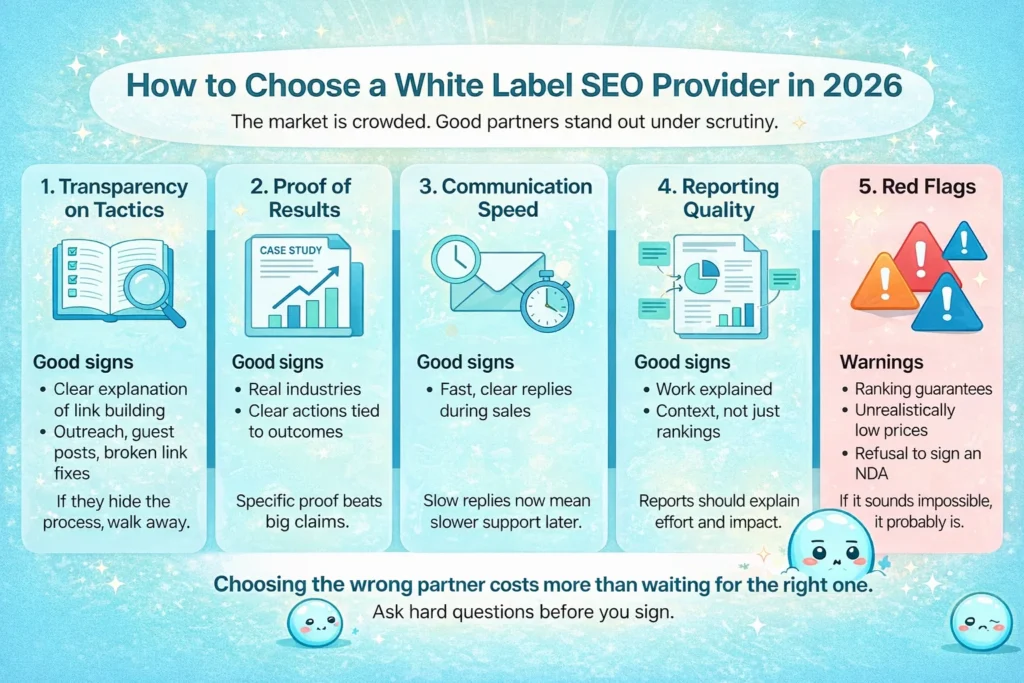
1. Transparency on Tactics
Ask them: “How do you build links?” If they say “It’s a secret trade secret,” run. They should say: “We do outreach, we write guest posts, we fix broken links.”
2. Proof of Results
Ask for case studies. Not just “We increased traffic by 500%,” but “Here is a client in the HVAC industry, here is what we did, and here is the graph.”
3. Communication Speed
Send them an email with a question. If they take 3 days to reply during the sales process, imagine how slow they will be once they have your money.
4. Reporting Quality
Ask for a sample report. Is it just a list of rankings? Or does it explain what work was done?
5. Red Flags
- Guarantees (“We promise #1 ranking in 30 days”).
- Prices that seem impossible ($99/month for full SEO).
- Refusal to sign an NDA.
Pricing Models for White Label SEO
You need to make money. Here is how the pricing usually breaks down.
Monthly Packages
The most common. You pay the provider $500/month. You charge the client $1,000/month. Pros: Predictable revenue. Cons: Scope creep can kill margins.
Per-Project
“Fix this website audit for $1,500.” Pros: clear deliverables. Cons: No recurring revenue.
Performance-Based
You pay based on rankings or traffic increases. Pros: Low risk. Cons: High friction. Arguments over attribution (“Did your SEO do that, or my TV ad?”).
Typical Markup
I usually see agencies marking up services by 50% to 100%. If you buy it for $1,000, you sell it for $1,500 to $2,000. Surveys show that 58% of businesses cite cost efficiency as the main driver for outsourcing, allowing you to earn that margin by handling the client connection, strategy, and billing.
Risks and Limits
It isn’t all sunshine. You need to be aware of the pitfalls.
- Quality Control: In the end, it is your reputation on the line. If the provider builds spammy links, your client’s site gets penalized, and you get fired.
- Dependency: If your provider suddenly goes out of business or raises prices, you are in a tight spot.
- Communication Delays: Your client asks a question. You have to ask the provider. The provider answers. You tell the client. This game of “telephone” can be frustrating.
How sneo.ai Helps with White Label SEO Planning
I built sneo.ai because I saw a massive gap in how agencies handle the “translation” layer of white label work.
You might have a great provider doing the technical work, but you still need to present a plan to your client. You can’t just forward a spreadsheet.
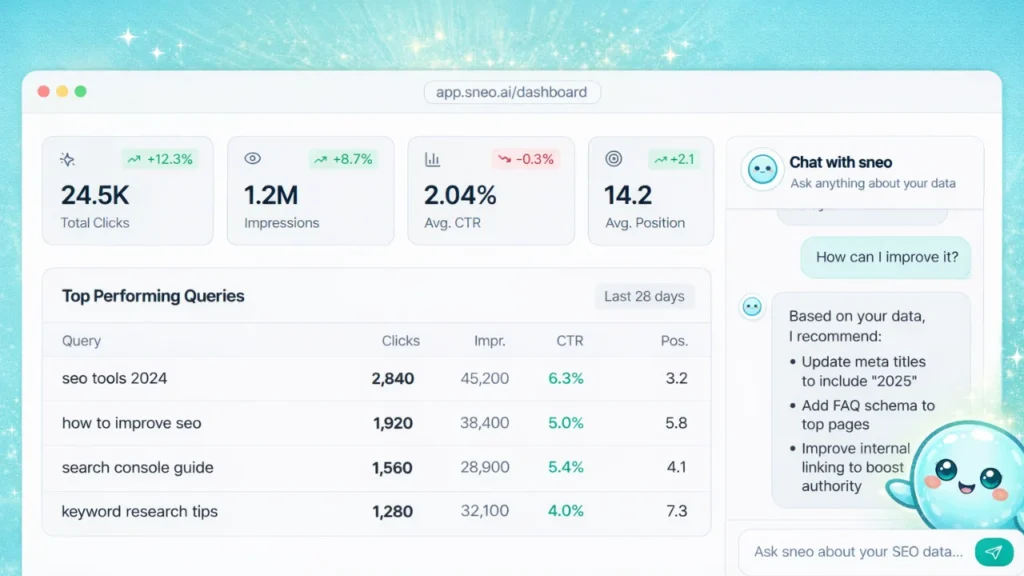
With sneo.ai, you can generate a white label SEO plan based on your own branding. You connect the client’s Google Search Console, and instead of staring at confusing charts, you can ask questions in plain English.
“What are the lowest hanging fruit keywords for this client?”
sneo.ai analyzes the data and gives you the answer. You can then take that insight and put it directly into your proposal or monthly report. It speeds up your proposals and keeps your branding consistent across every project. It makes you look like a data genius, even if you haven’t looked at the raw data yourself.
How to Start Offering White Label SEO Step-by-Step
Ready to go? Here is my checklist.
1. Define Your Scope
Don’t offer everything. Start small. Maybe just “Local SEO” or “Content Optimization.”
2. Vet 3 Providers
Do not just pick the first one on Google. Interview three. Get sample reports.
3. Set Your Pricing
Calculate your costs, add your management time, and then add your profit margin.
4. Create Your Sales Assets
Update your website. Create a PDF one-pager that explains what you do.
5. Set Up the Reporting Flow
Decide how you will report. Will you use the provider’s raw PDF? (Please don’t). Will you use a dashboard? Will you use sneo.ai to pull insights?
6. Sell to Your Friendliest Client First
Don’t pitch your biggest, scariest client first. Pitch a client who trusts you. Be honest: “We are launching a new SEO partnership and I’d love to get you on the beta pricing.”
Best Practices for Long-Term Success
- Set Realistic Timelines: Tell clients SEO takes 3 to 6 months. If you promise results in week 1, you set your provider up to fail.
- Review Before Sending: Always, always open the report before you send it to the client. Catch the typos. Check the data.
- Keep Communication Tight: Have a weekly sync with your provider. Treat them like your employees.
Conclusion
White label SEO is growing in 2026 because the online market is becoming too complex for generalists. You cannot be an expert in TikTok ads, email automation, and technical SEO schema all at once.
Using a white label partner allows you to stay focused on what you do best—managing the client connection and driving overall strategy—while ensuring the technical execution happens correctly.
Whether you are a solo consultant or a 10-person agency, this model helps you scale without the risk of hiring full-time staff. Just remember: the value isn’t just in the work; it is in how you present that work to your client.
FAQ – White Label SEO
1) What is white label SEO in simple terms?
It is when you hire another company to do SEO work, but you present it to your client as your own work under your brand name.
2) Is white label SEO legal and ethical?
Yes, absolutely. It is standard practice in many industries (like construction, manufacturing, and software). As long as the work is high quality, the client cares about results, not who clicked the buttons.
3) What is the difference between white label SEO and private label SEO?
They are very similar. White label usually refers to standard packages sold as-is. A private label often implies a more customized product built specifically for your brand’s specifications.
4) How does SEO reselling make money?
You buy the service at a wholesale rate (e.g., $500) and sell it at a retail rate (e.g., $1,000). The difference is your margin for managing the client and strategy.
5) Do clients know that SEO work is outsourced?
Usually, no. The reports, emails, and dashboards carry your branding. However, some agencies prefer transparency and tell clients they have “partner teams” handling execution.
6) What should I look for in a white label SEO provider?
Transparency, proof of past results, good communication, and ethical tactics (no spammy link building).
7) Is white label SEO suitable for beginners?
Yes, it is actually great for beginners because you rely on the provider’s expertise. You don’t need to know how to fix a canonical tag to sell the service.
8) Can white label SEO be used for local businesses?
Yes, local SEO (Google Business Profile optimization, citations) is one of the most popular white label services.
9) How does white label digital marketing differ from single-service white label SEO?
White label online marketing is a broader term that includes SEO, but also PPC, social media management, and content marketing bundled together.
10) Can I create branded SEO plans and reports for my clients?
Yes. While providers give you raw data, you should create your own branded plans. I strongly suggest using sneo.ai, which allows you to generate a white label SEO plan based on your own branding and the client’s actual data.